Evolution isn't true
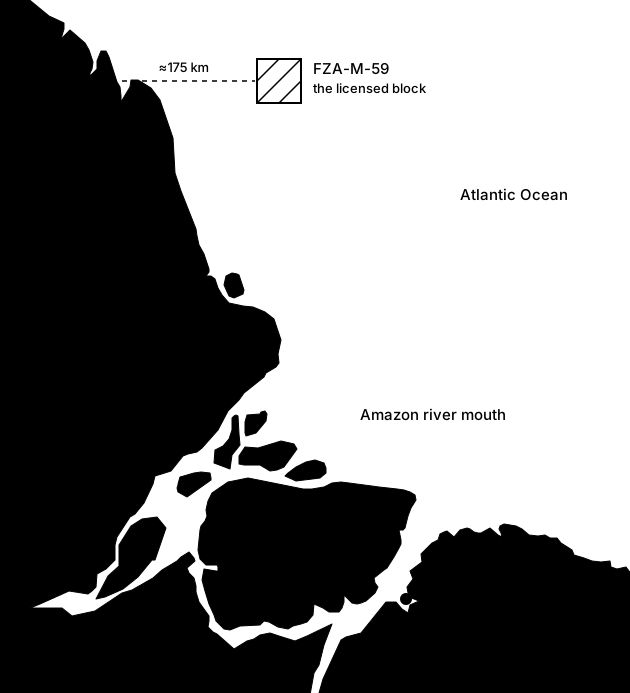
On October 20, three weeks before Brazil hosts the first climate summit ever held in the Amazon, Brazil's environmental agency licensed Petrobras to drill an exploratory oil well near the mouth of the Amazon river. The agency's own technical staff had recommended against it, for years. They were overruled, the license was signed, and the summit preparations continued without a pause.
Hold both of those in one hand: the conference and the drill, same government, same forest, same month.
COP30 opens in Belém on November 10. It's the 30th of these conferences and the first inside the Amazon, 10 years after the Paris agreement, in the first stretch of years where the planet has actually touched the 1.5 degrees everyone promised to avoid. The symbolism was supposed to be the point. The mouth of the river got a different symbol first.
The bind is real
Before I say what I think of the license, let me concede what's true in Brazil's defense, because it's a lot.
The atmosphere has a budget: a total amount of carbon that can be burned before the warming passes the agreed limits. The countries now richest spent most of that budget building their wealth, over 2 centuries, and they're not done. The same governments that ask Brazil to leave its oil buried are approving new fields in their own waters this decade. Meanwhile the money that was supposed to compensate the difference keeps not arriving: last year's summit in Baku promised $300 billion a year by 2035, against the $1.3 trillion that the countries carrying the damage showed they need, and "promised" here means "mobilized", a word that includes loans, reshuffled aid and accounting.
So when a Brazilian official says the North wants the South to stay poor and call it climate policy, that's not paranoia. It's the arithmetic.
However, the bind explains the license. It doesn't justify it. Somebody in Brasília still weighed a reef system, the Indigenous and quilombola communities that live from that coast, and the agency's own technical opinion against a barrel price, and the barrel won, 3 weeks before hosting the world to talk about the opposite. The asymmetry is the center's crime. The signature is ours.
The wrong argument about the wrong people
Here's what I expect from the summit itself, having watched 29 of these from a distance: a long argument about who should manage the forest. States, funds, carbon markets, satellite monitoring, results-based payments. Management, management, management.
Almost nobody in those rooms will say the obvious thing: the forest already has its people, and they're the only party in this story with a working record.
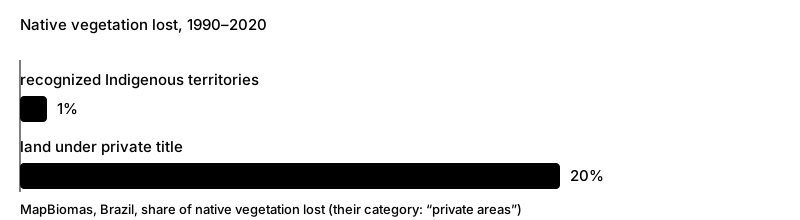
I'm for Indigenous sovereignty, plainly, as a matter of right and not of usefulness. But since the summit speaks the language of results, here's one number in that language. Between 1990 and 2020, the recognized Indigenous territories of Brazil lost about 1% of their native vegetation. Land under private title lost 20 times more. And "private title" is doing quiet work in that sentence: in the Amazon, a lot of it began as public or Indigenous forest, taken first and papered afterwards. We even have a word for the industry that manufactures the deeds. The best forest protection we have, measured over 30 years, is Indigenous people holding their own land, and it isn't close.
They didn't achieve that with pledges or offset markets. They achieved it by not treating the forest as inventory in the first place: taking what's needed, leaving the rest standing, for 500 years under pressure that would have flattened any institution the summit could design.
The negotiation treats them as stakeholders to consult, one voice among many on the question of how the forest should be run. They're not one voice among many. They're the people the forest belongs with, and the only ones who never needed it managed.
The premise underneath
Strip away the finance and the acronyms and the whole dispute rests on one premise, shared by driller and delegate alike: that this is what evolution looks like. Extract, industrialize, get rich, and repair nature later, the way every rich country did. Brazil's government believes it. The North believed it first and built the world on it.
In Portuguese the word is evolução, and it does a lot of quiet work: it makes the oil well sound like a stage of growing up, and the forest like something a country outgrows.
I don't believe it anymore. An evolution paid for with the thing that keeps you alive isn't evolution; a species that burns its own habitat isn't advancing, it's failing with confidence. The people who never accepted that premise are the ones whose forest is still standing, and they're the ones being consulted, politely, about the terms of its management.
That's a lot of certainty from a guy who usually writes about charts!
I'll be watching the summit anyway, and I'd genuinely like to be wrong about it. Maybe the money arrives this time. Maybe the license gets challenged. But whatever gets signed in Belém, remember what was signed in October, because pledges expire and drilling permits don't.
Evolution that destroys nature isn't evolution. It's the oldest activity there is, wearing a newer word.